1897
Byrsa
1960
Dido
1987
2000
Today
1897 — Today

More than a century
above Carthage.

Step back in time
The forebear

The Grand Hôtel Saint-Louis.

In 1897, on the south-eastern brow of the hill of Byrsa — where, one evening in 146 BC, Rome struck Carthage from the map — a hotel opened its doors: the Grand Hôtel Saint-Louis et de Carthage.

Twenty-five rooms, arcades stacked one upon another, and a view commanding the bay and the Punic port. Travellers of the early century broke their journeys here, a few steps from the Saint-Louis chapel and its garden of antiquities.
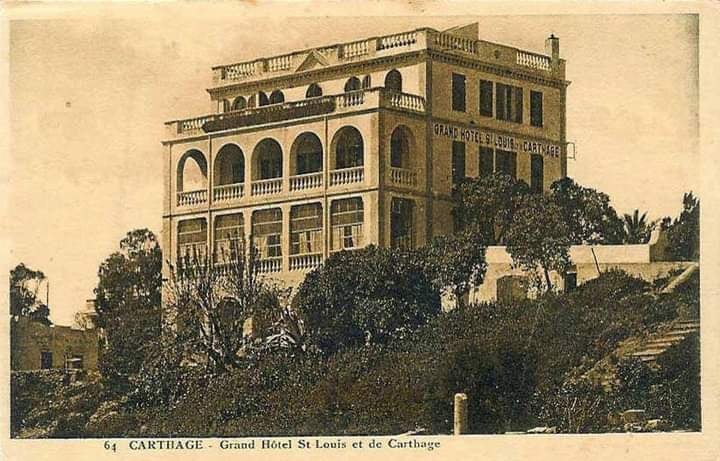
Old postcard of the Grand Hôtel Saint-Louis et de Carthage, around 1897: a building of stacked arcades crowning the hill, long since vanished.
The Grand Hôtel Saint-Louis, circa 1897 — the forebear, now vanished.
The place

A hill heavy with memory.

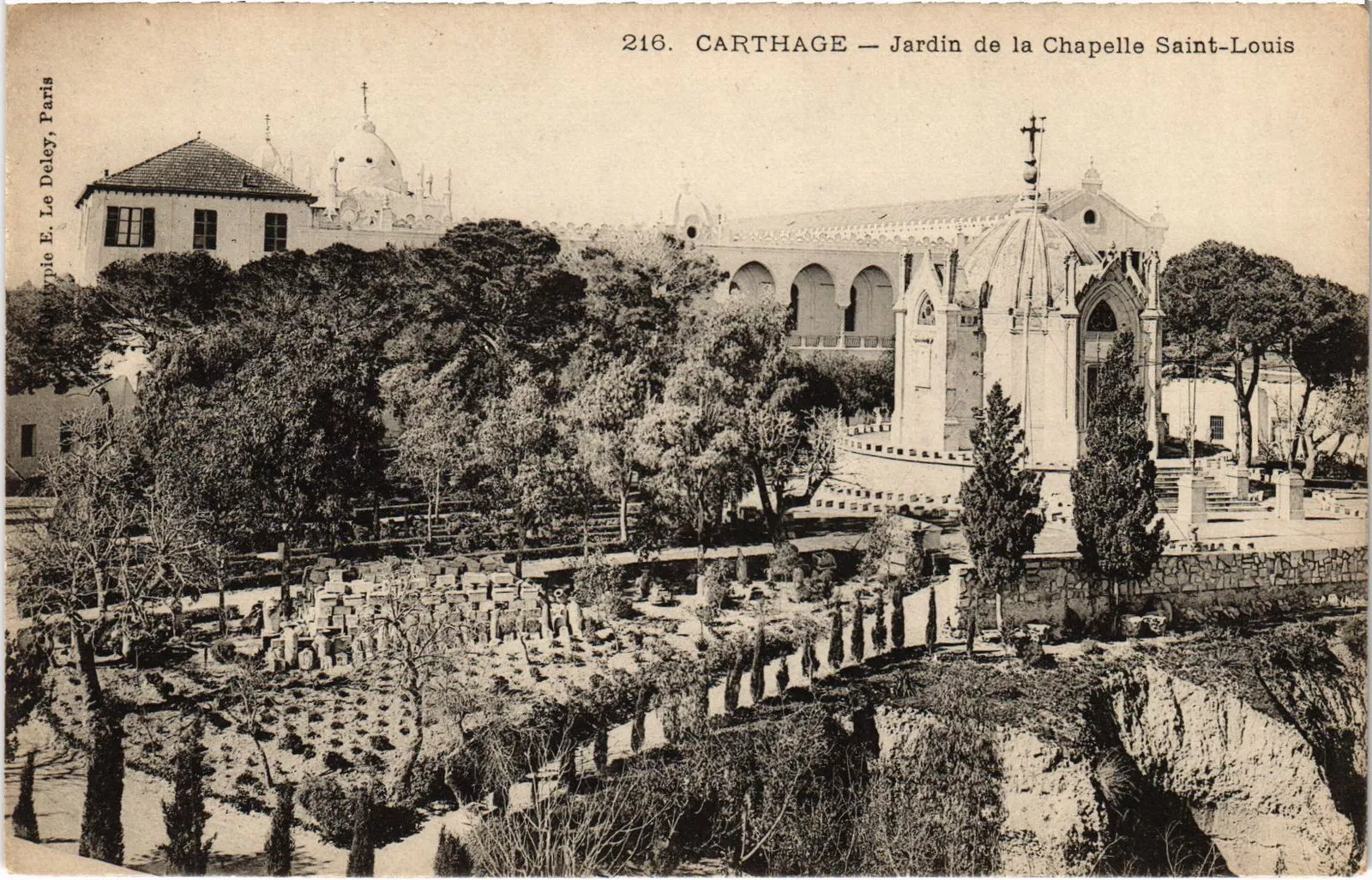
This is no ordinary ground. On this acropolis, France and the Church raised a whole ensemble to the memory of Louis IX, who died near here in 1270: the chapel in 1841, the White Fathers' museum in 1879, the Saint-Louis cathedral consecrated in 1890 — now the Acropolium — and the National Museum of Carthage, its immediate neighbour.

The hotel has always lived at the edge of this ensemble, between Punic ruins and Christian stone. A century has gone by — the stone is still here.

Old postcard of the Saint-Louis chapel garden on the hill of Byrsa, with the arcaded museum.
The Saint-Louis garden on the hill of Byrsa, in the early years of the century
The rebuilding

A larger house.

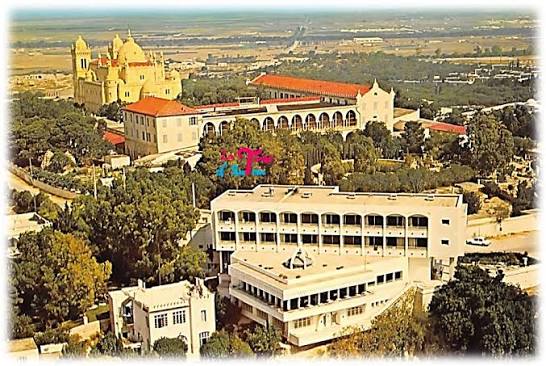
In the 1960s, in the first years of independence, the old hotel gave way to something far grander in scale — limewashed white, rhythmed by arcades, visible from almost anywhere in Carthage.

It is this building, modern and Mediterranean, that the villa inhabits to this day.

Aerial view of the hotel in the 1960s, at the foot of the Saint-Louis cathedral of Carthage and the national museum.
The hotel in the 1960s — the present building, at the foot of the Saint-Louis cathedral and the museum.
The queen's name

The name of a queen.

In time, the house took the name of a queen: Dido — Elissa — legendary founder of Carthage. Hôtel Reine Didon, then Villa Didon.

The choice was not an idle one. In the legend, Dido founds her city by cunning: granted only as much land as an oxhide might cover, she cuts the hide into the finest of strips and rings the greatest domain she can. Ingenuity, tenacity, elegance — the qualities the villa would claim as its own.

"Dido did not merely found Carthage. She founded the idea that a place is earned by what you bring to it, not by what you take from it.

1987 · The culmination

The house finds its man.

In 1987 the house on Byrsa changed hands. It was still called the Reine Didon. It would not change at once: ten years passed before the first wall moved. The man who had just acquired it was in no hurry — he had been waiting for this hill from the start.

Mongi Loukil had built where Tunisian tourism was still to be built: Hammamet, Djerba, then Tozeur, where he built before the others and where he returned in the depth of the crisis, when everyone else was leaving. A whole generation followed him. But of all the houses he raised, none was this one.

What he wanted here was not another hotel, but a house where art is spoken of. In 1998 he founded the Didon d'or — a prize with no category, neither literary nor scientific nor social, awarded to a Tunisian woman, or an institution of women, for a modest gesture or a life's work. No criterion but excellence. He died in 2019. His sons hold the house.

Portrait of Mongi Loukil, smiling, in a suit and tie
Mongi Loukil.
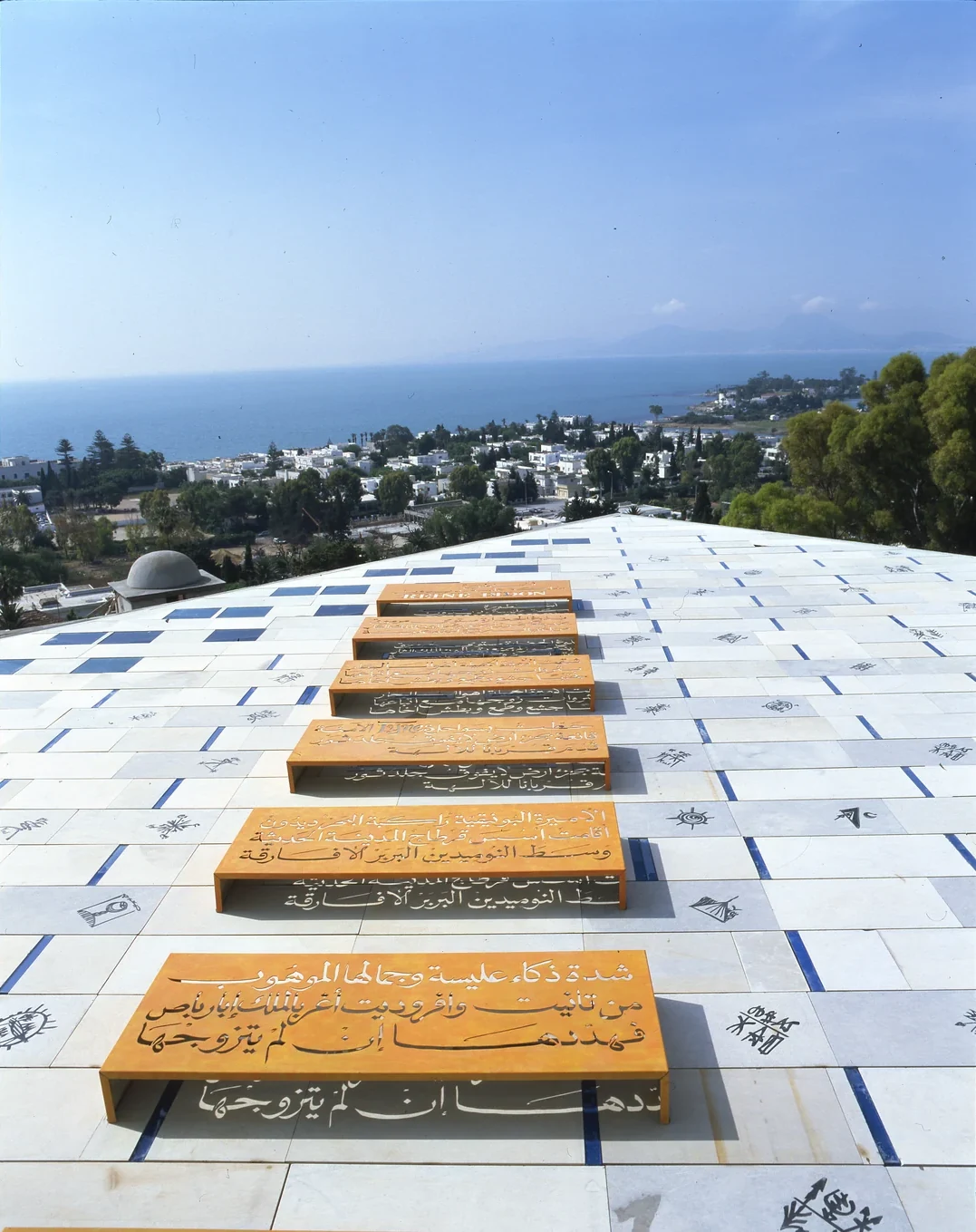
Rachid Koraïchi's calligraphed stelae lined along the villa's upper terrace, facing the bay of Carthage in broad daylight
Rachid Koraïchi's stelae on the terraces — calligraphy reimagined, facing the bay.
2000 · The renaissance

Clean lines and works of art.

From 1997, the French architect and designer Philippe Boisselier rethought the villa entirely — it would open in the spring of 2004: pared-back lines, white walls, pale stone, a portico of slender columns. The house became a boutique hotel where more than twenty works by Tunisian and international artists hold their own conversation with the light. The architecture chooses to keep quiet so the works can speak. Art here is not exhibited — it lives in the house. Among the works, Rachid Koraïchi's calligraphed stelae still keep watch over the terraces, facing the bay.

Today

Ten suites, one bay,
one hill.

More than a century after the first traveller, the villa still receives its guests on the same hill, facing the same bay. Each day different, each evening new.

Experience Villa Didon