The menu follows the market, day after day. But a few plates carry the hand of the house. Step into the kitchen.
Carthage below,
the Mediterranean as far as the eye can see.
Here bistronomy turns solar,
candid, and a little unruly.
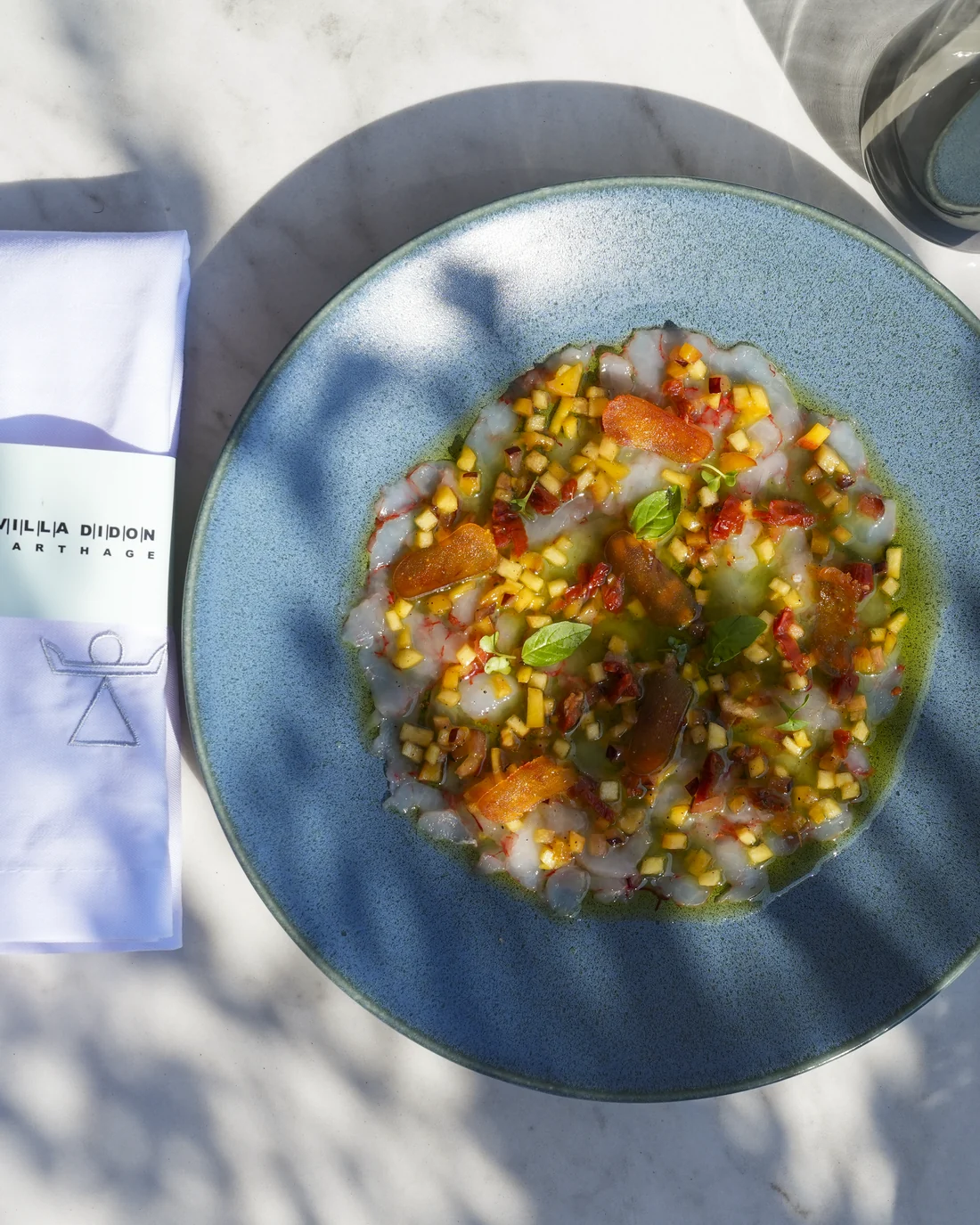
Sea bream ceviche, Peruvian style. Nothing has met the fire: the blade, the citrus, and the oil that binds them. It is served outside, on the marble — the shadow of the leaves moves across the plate while you look at it.
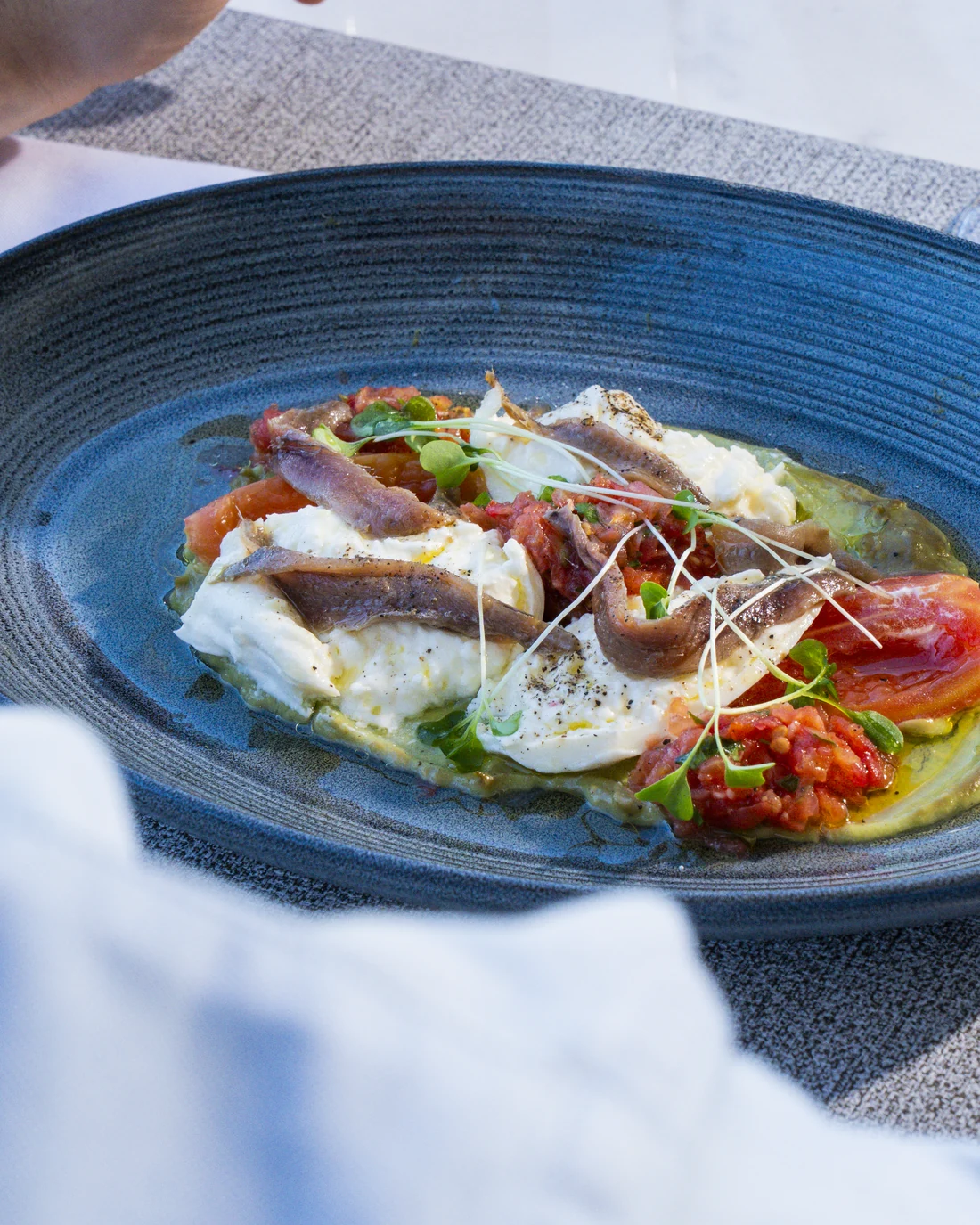
The burrata opens under the spoon and puts up no defence. Confit tomatoes, basil oil, a stroke of anchovy. It is the dish you order for the table, and that nobody really shares.
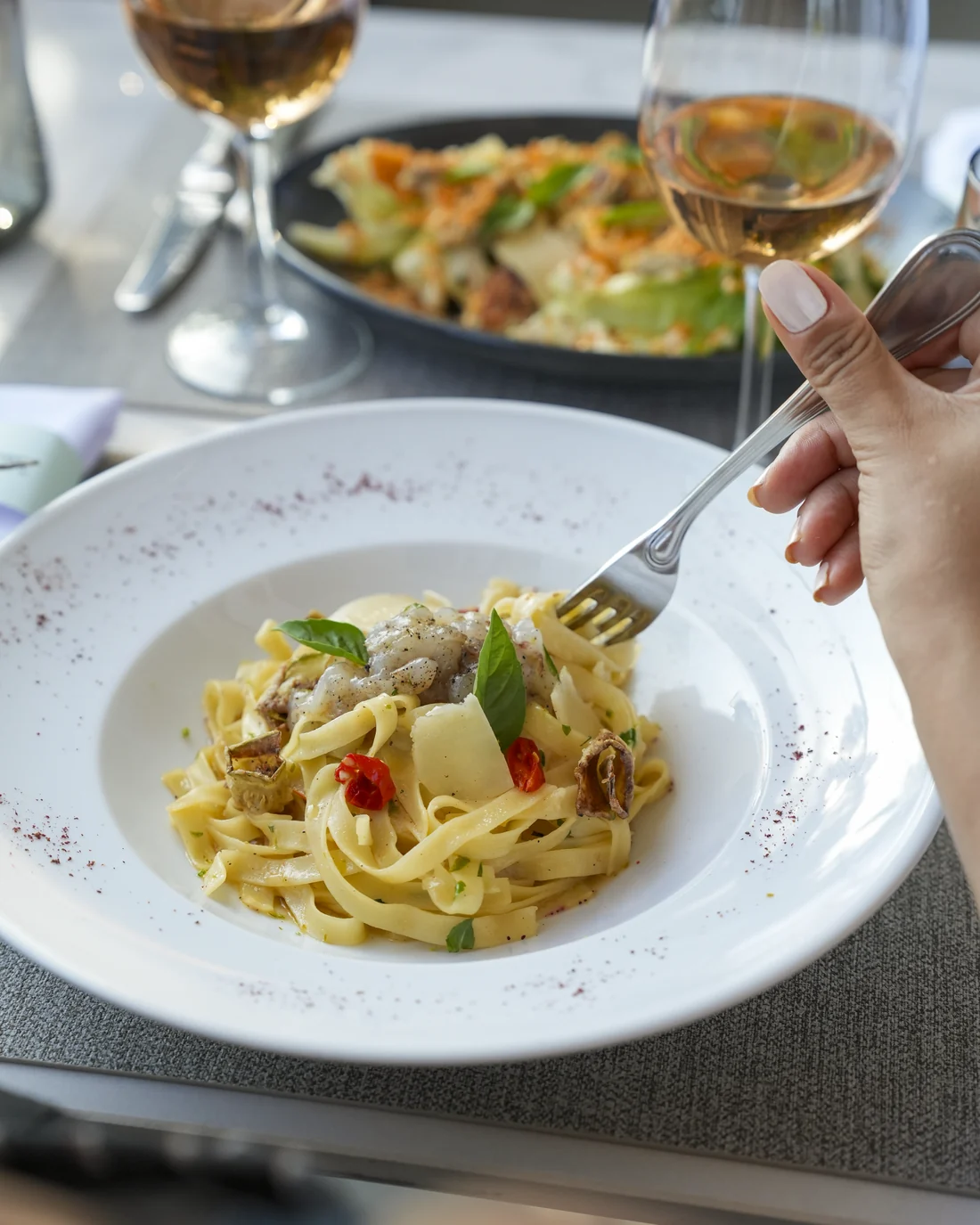
Lemon tagliatelle, garlic cream, a tartare of prawns. Italy is directly opposite, across this sea — we are only answering it, in the accent of this shore.
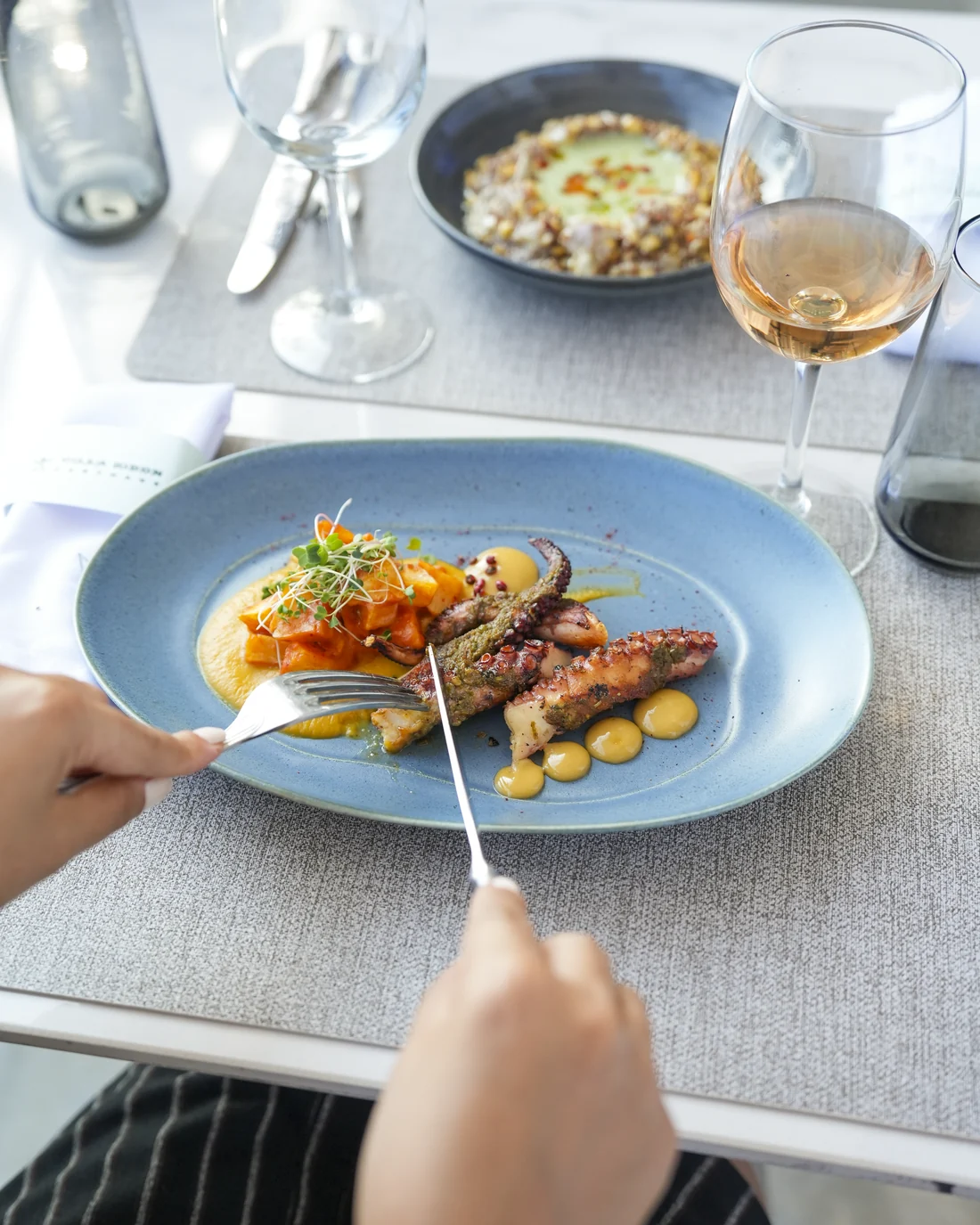
The octopus goes to the plancha, the chermoula wakes it, the pumpkin purée settles it. Three shores in one plate — and not one of them pretending.
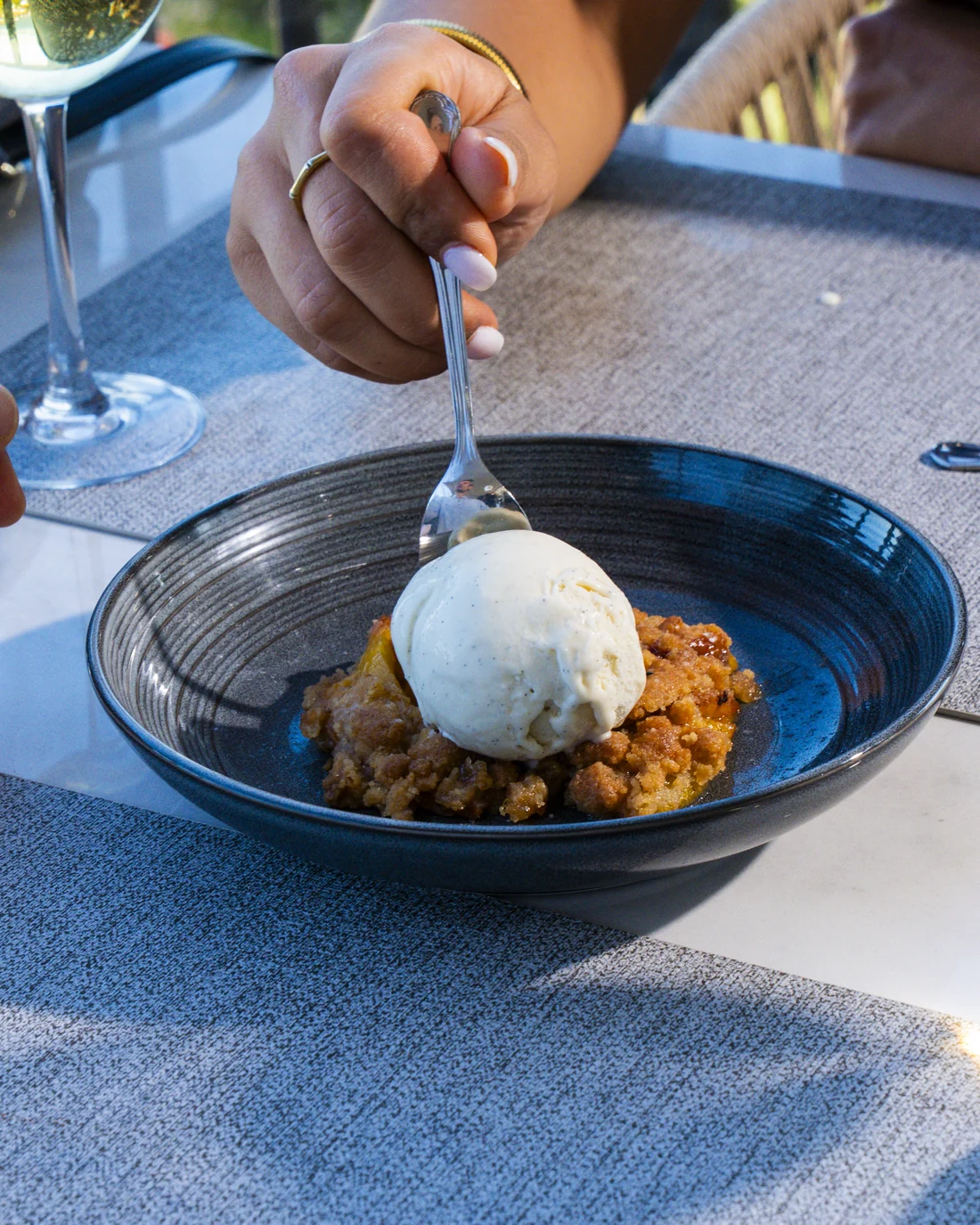
The question is printed on the menu, question mark and all. The answer arrives warm beneath something cold, and nobody argues with it.
These plates set the tone. The menu itself changes every morning — with whatever the fish auction and the kitchen garden see fit to give.